
The year 2008 will always be remembered for quite a few things, not least of all for the turmoil in the global economy, particularly in the financial sector where giants like Lehman Brothers, Bear Stearns and others tumbled. The same year also saw the extreme gyrations in the spot oil markets which had far reaching impacts across the world. Today, we look at the top energy stories and related developments during the year that went by – events that will affect many aspects of the year ahead.
Unprecedented crude oil price volatility
During the early part of the year, crude oil rose to its highest ever price of almost $150 per barrel. Peak Oil was almost ready to provide an explanation for it when prices slipped into a four year low of around $30 driven by the economic slump. There are many reasons for this – the demand-supply gap , speculation, political risk, etc. As a consequence, there was a fair amount of economic particularly in transportation- the price of gasoline shot up effecting many consumers.
The price rise also contributed to the poor performance of the airline and automobile sectors. contributing to bankruptcy and consolidation of airlines while the automobile industry faced deep financial trouble when people stopped buying low mileage vehicles.. Later, when the oil price tumbled, some non integrated oil companies were affected adversely, particularly those that made large bets on alternative fuels. The retail side was also impacted, companies such as Flying J declared bankruptcy.
Renewable energy took off, but then didn’t
There was renewed interest and impetus in alternative and renewable sources of energy in 2008. This was one of the direct fallouts of the oil price spike in the middle of 2008. Consumers were increasingly looking for sustainable sources of energy. . The US presidential elections put additional spotlight on this issue and the newly elected president Barak Obama has put a major focus on an attempt to shift away from fossil fuel in the long term.
However the opportunistic investments in alternatives haven’t panned out in the short term. Despite production mandates and federal subsidies, ethanol producers are not minting any money. Falling crude and rising corn prices were deleterious to the effort. Renewable energy enthusiasts hit ground reality when second generation ethanol was delayed. Range Fuels, who intended to start producing by 2008 initially delayed to 2009 and now production isn’t forecast to begin until 2010.
Environment,Nature and Politics
Some major oil refineries had to be shut down because of hurricane Gustav followed by hurricane Ike in North America. Though the outages were short termed, many gas stations in the southeast ran out of gas, raising concerns about starting of something more widespread.
Somali pirates proved to be a major threat to oil vessels operating out of the oil rich African continent. Emboldened by recent ransom payments, they hijacked a Saudi supertanker carrying oil worth $100 million. Countries with interest in the continent have stepped up their maritime security in the area which has considerably brought down the number of such incidents.
Political maneuvering in certain hotspots also created short term demand instabilities. Nigeria, Iran and Venezuela continued to have internal upheavals. The end of the year saw some additional volatility in the Middle East and in gas transport issues between Russia and Ukraine.
Record profits by oil companies
Despite the steep fall in oil prices during the later part of the year, integrated oil companies made record profits with the help of high prices during the beginning of the year. Companies like Exxon Mobil posted biggest profit in history during the same year when downstream profits in refining fell along with gasoline consumption.
OPEC went ahead with its big production cut to counter flagging demands, followed by lowered production in other countries like Russia and Mexico. The results are not visible yet, but many hope this together with a recovering economy will stabilize the oil prices in the near future.
Showing posts with label Renewable Energy. Show all posts
Showing posts with label Renewable Energy. Show all posts
Thursday, January 8, 2009


Monday, December 22, 2008
Greener pastures
There are many threads of discussions on clean energy use. The recently concluded US presidential election probably was a catalyst for the uptick in these discussions, particularly in transportation, the area of alternative energy that seems to be most engaging to the average person.. In fact the Go Green” buzzword has gone crossed over from the environmentalists’ domain to the whole world at large. And today industry is responding. The future holds many promises with firms coming up with both fuel-efficient and cleaner options.
Where do we stand right now in terms of live projects of ultra low emission transportation options? Here are some recent advances in the field.
Battery powered cars
In 2008, Tesla Motors began producing the Tesla Roadster – a 100% electric sports car that does 0-60 miles per hour under four seconds a with top speed of around 200 kilometer per hour. That’s pretty fast by any standard, battery or gasoline. The car uses no gasoline and can boast of zero carbon emission (provided the battery is charged from a renewable energy source like solar panels). Single the charge is enough to last for over 350 kilometers. Priced at around $100,000 for two seater, this vehicle has been finding buyers among early adopters.
However, refueling is not as quick as with a vehicle that runs on petrol. It takes about three and a half hours to recharge a fully drained battery. Though it is unlikely to run down a battery before its overnight recharge in urban condition, but it is certainly not practical for long journeys or to places without access to electricity. Another concern is around power supply – if millions of such cars are plugged in, power grids will have to undergo costly grid expansion.
Hydrogen fuel-cell cars
Honda’s FCX Clarity is the world’s first production hydrogen fuel-cell vehicle. The outcome of over two decades of research is a non-polluting sedan (the only emission is water vapour) that can travel up to 450 kilometers on one tank and reach a speed of up to 160 kilometer per hour. The car runs on a lithium battery pack and a hydrogen storage tank. Fuel economy of the Honda FCX Clarity is twice than that of a similar size and performance gasoline powered car.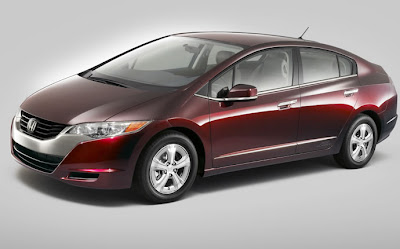
The disadvantage again is the availability of hydrogen filling stations. Even in the US distribution of hydrogen filling station is very sparse. There are just five hydrogen filling stations in the greater LA/Orange County area – where most of the cars are currently leased.
Plane that runs on gas
It is not just automobiles that are turning green. On February 2008, the Airbus A380 became the first commercial aircraft to fly with synthetic liquid fuel processed from gas. The fuel is produced using Fischer-Tropsch process and is known as gas-to-liquids (GTL). The European aircraft manufacturer has admitted it to be a “practical alternative to conventional jet fuel in the short term.”Moreover, GTL enjoys the many other advantages in terms of aircraft fuel burn and virtually free of impurities like sulphur. While the basic science for this has been around for a while, large scale commercial applications are taking off.
I think the next few years are likely to see many more advances such as these.
Where do we stand right now in terms of live projects of ultra low emission transportation options? Here are some recent advances in the field.
Battery powered cars
In 2008, Tesla Motors began producing the Tesla Roadster – a 100% electric sports car that does 0-60 miles per hour under four seconds a with top speed of around 200 kilometer per hour. That’s pretty fast by any standard, battery or gasoline. The car uses no gasoline and can boast of zero carbon emission (provided the battery is charged from a renewable energy source like solar panels). Single the charge is enough to last for over 350 kilometers. Priced at around $100,000 for two seater, this vehicle has been finding buyers among early adopters.

However, refueling is not as quick as with a vehicle that runs on petrol. It takes about three and a half hours to recharge a fully drained battery. Though it is unlikely to run down a battery before its overnight recharge in urban condition, but it is certainly not practical for long journeys or to places without access to electricity. Another concern is around power supply – if millions of such cars are plugged in, power grids will have to undergo costly grid expansion.
Hydrogen fuel-cell cars
Honda’s FCX Clarity is the world’s first production hydrogen fuel-cell vehicle. The outcome of over two decades of research is a non-polluting sedan (the only emission is water vapour) that can travel up to 450 kilometers on one tank and reach a speed of up to 160 kilometer per hour. The car runs on a lithium battery pack and a hydrogen storage tank. Fuel economy of the Honda FCX Clarity is twice than that of a similar size and performance gasoline powered car.

The disadvantage again is the availability of hydrogen filling stations. Even in the US distribution of hydrogen filling station is very sparse. There are just five hydrogen filling stations in the greater LA/Orange County area – where most of the cars are currently leased.
Plane that runs on gas
It is not just automobiles that are turning green. On February 2008, the Airbus A380 became the first commercial aircraft to fly with synthetic liquid fuel processed from gas. The fuel is produced using Fischer-Tropsch process and is known as gas-to-liquids (GTL). The European aircraft manufacturer has admitted it to be a “practical alternative to conventional jet fuel in the short term.”Moreover, GTL enjoys the many other advantages in terms of aircraft fuel burn and virtually free of impurities like sulphur. While the basic science for this has been around for a while, large scale commercial applications are taking off.
I think the next few years are likely to see many more advances such as these.
Subscribe to:
Posts (Atom)


