
There has been a fair amount of hype in the biofuels arena over the last year or two. There were large project announcements on sugar/ corn based ethanol and cellulosic ethanol projects saw more activity beyond the blue print phase. Entrepreneurs also announced a slew of algae based culture for biofuel production. The hype was pretty thick until oil prices slid in late 2008, when a lot of projects started being shelved due to lower oil prices.
So where are we today? Are biofuels programs still going strong? Is the economic platform strong enough to weather the price deflation and volatility of these days? Has the credit crunch affected project financing?
These questions can be answered to a large part by the goverment policies and intervention. Regulatory & energy policies will affect much of the development of this field in the near future. The EU already has a strong set of incentives and program extensions for biofuels development and deployment at the retail end. The US has mandated that by 2022 7% of transportation gasoline come from cellulosic ethanol. The expectation is that the Obama administration will funnel more dollars on R&D in this area. Pure play biofuel companies such as Amyris are already moving along the path to commercialization in anticipation of these incentives.
The market for transportation biofuels is likely to be pretty large. Sandia Labs just released a report this week that found plant and forestry waste and dedicated energy crops could sustainably replace nearly a third of gasoline use in the US by the year 2030.
With those kinds of forecasts, its no wonder there has a steady drip of new venture investments in biofuels. Last year VCs , including a lot of marquee names like Vinod Khosla, funded biofuels startups to the tune of $680 million. Now even the majors are expanding their role. The Wall Street Journal reported yesterday that BP will be developing the world's biggest cellulosic biofuels plant in Florida through its partner Verenium.
The coming months will give a better picture on the investment climate for biofuels projects. The overall trend though is looking positive for the bio fuels industry.
Showing posts with label Alternative Energy. Show all posts
Showing posts with label Alternative Energy. Show all posts
Friday, February 20, 2009


Monday, December 22, 2008
Greener pastures
There are many threads of discussions on clean energy use. The recently concluded US presidential election probably was a catalyst for the uptick in these discussions, particularly in transportation, the area of alternative energy that seems to be most engaging to the average person.. In fact the Go Green” buzzword has gone crossed over from the environmentalists’ domain to the whole world at large. And today industry is responding. The future holds many promises with firms coming up with both fuel-efficient and cleaner options.
Where do we stand right now in terms of live projects of ultra low emission transportation options? Here are some recent advances in the field.
Battery powered cars
In 2008, Tesla Motors began producing the Tesla Roadster – a 100% electric sports car that does 0-60 miles per hour under four seconds a with top speed of around 200 kilometer per hour. That’s pretty fast by any standard, battery or gasoline. The car uses no gasoline and can boast of zero carbon emission (provided the battery is charged from a renewable energy source like solar panels). Single the charge is enough to last for over 350 kilometers. Priced at around $100,000 for two seater, this vehicle has been finding buyers among early adopters.
However, refueling is not as quick as with a vehicle that runs on petrol. It takes about three and a half hours to recharge a fully drained battery. Though it is unlikely to run down a battery before its overnight recharge in urban condition, but it is certainly not practical for long journeys or to places without access to electricity. Another concern is around power supply – if millions of such cars are plugged in, power grids will have to undergo costly grid expansion.
Hydrogen fuel-cell cars
Honda’s FCX Clarity is the world’s first production hydrogen fuel-cell vehicle. The outcome of over two decades of research is a non-polluting sedan (the only emission is water vapour) that can travel up to 450 kilometers on one tank and reach a speed of up to 160 kilometer per hour. The car runs on a lithium battery pack and a hydrogen storage tank. Fuel economy of the Honda FCX Clarity is twice than that of a similar size and performance gasoline powered car.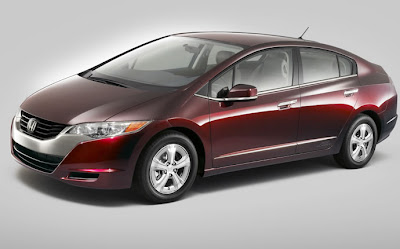
The disadvantage again is the availability of hydrogen filling stations. Even in the US distribution of hydrogen filling station is very sparse. There are just five hydrogen filling stations in the greater LA/Orange County area – where most of the cars are currently leased.
Plane that runs on gas
It is not just automobiles that are turning green. On February 2008, the Airbus A380 became the first commercial aircraft to fly with synthetic liquid fuel processed from gas. The fuel is produced using Fischer-Tropsch process and is known as gas-to-liquids (GTL). The European aircraft manufacturer has admitted it to be a “practical alternative to conventional jet fuel in the short term.”Moreover, GTL enjoys the many other advantages in terms of aircraft fuel burn and virtually free of impurities like sulphur. While the basic science for this has been around for a while, large scale commercial applications are taking off.
I think the next few years are likely to see many more advances such as these.
Where do we stand right now in terms of live projects of ultra low emission transportation options? Here are some recent advances in the field.
Battery powered cars
In 2008, Tesla Motors began producing the Tesla Roadster – a 100% electric sports car that does 0-60 miles per hour under four seconds a with top speed of around 200 kilometer per hour. That’s pretty fast by any standard, battery or gasoline. The car uses no gasoline and can boast of zero carbon emission (provided the battery is charged from a renewable energy source like solar panels). Single the charge is enough to last for over 350 kilometers. Priced at around $100,000 for two seater, this vehicle has been finding buyers among early adopters.

However, refueling is not as quick as with a vehicle that runs on petrol. It takes about three and a half hours to recharge a fully drained battery. Though it is unlikely to run down a battery before its overnight recharge in urban condition, but it is certainly not practical for long journeys or to places without access to electricity. Another concern is around power supply – if millions of such cars are plugged in, power grids will have to undergo costly grid expansion.
Hydrogen fuel-cell cars
Honda’s FCX Clarity is the world’s first production hydrogen fuel-cell vehicle. The outcome of over two decades of research is a non-polluting sedan (the only emission is water vapour) that can travel up to 450 kilometers on one tank and reach a speed of up to 160 kilometer per hour. The car runs on a lithium battery pack and a hydrogen storage tank. Fuel economy of the Honda FCX Clarity is twice than that of a similar size and performance gasoline powered car.

The disadvantage again is the availability of hydrogen filling stations. Even in the US distribution of hydrogen filling station is very sparse. There are just five hydrogen filling stations in the greater LA/Orange County area – where most of the cars are currently leased.
Plane that runs on gas
It is not just automobiles that are turning green. On February 2008, the Airbus A380 became the first commercial aircraft to fly with synthetic liquid fuel processed from gas. The fuel is produced using Fischer-Tropsch process and is known as gas-to-liquids (GTL). The European aircraft manufacturer has admitted it to be a “practical alternative to conventional jet fuel in the short term.”Moreover, GTL enjoys the many other advantages in terms of aircraft fuel burn and virtually free of impurities like sulphur. While the basic science for this has been around for a while, large scale commercial applications are taking off.
I think the next few years are likely to see many more advances such as these.
Monday, October 6, 2008
Climate-Change Management: Managing the Environment
The world is gradually moving from fossil fuel to greener substitutes. The western European countries’ governments especially are spending millions of Euros on alternative power source. However, one can not deny the need of fossil fuel to keep the world moving on. Whether we like it or not, Oil and Gas are the still the basic source for all our primary energy needs – 65% to be precise.
Even though developed countries are looking for alternative, renewable energy, it will be unfair to expect the same from the developing countries to follow suit. Growing economies like China and India have rapidly increased their fuel consumption, resulting in even higher demands. The technology and reliability of renewable energy use on a widespread commercial basis are not yet established nor are expected to be for several decades. Exorbitant cost is another major factor.
The best bet in view of the environmental effects like Global Warming, is that we should be more responsible towards the nature before we disturb its fine balance. This new sense of responsibility has given rise to academic fields like Climate Change Management and allied jobs in the Oil and Gas sector like Environmental Engineer, Environmental Geologist and Environmental Scientist for Petroleum etc.
Presently, a large portion of money is being pumped into the climate-change management studies is flowing from government sponsored grants apart from corporate or academic Research & Development. The U.S. Global Change Research Program has invested almost $20 billion in the areas of climate change and global change research. As we speak, more and more corporations are jumping into the foray to get access to specialists who can help them anticipate and mitigate the business impact of climate change.
The field is relatively new – not just as a course of study, but also as a career path. However, one can find many related environmental services jobs, drawn from diverse disciplines such as meteorology, geology and engineering. Companies are in a lookout for environmentally-savvy managers who can deliver energy efficiency, low carbon emission, smart buildings as well as sustainable business practices. Many of these corporations are willing to pay a premium to get out in front of the macro trend. Most of the current entry-level jobs demands academic qualifications like a bachelor’s degree in engineering or environmental fields or even a science-related graduate degree. If you can mix environmental management with a business degree, there is a lot of scope.
If you’re prospecting for work, bear in mind that there’s no environmental job gold rush yet but if you are the type to plan ahead, this is a career path destined for important things.
Even though developed countries are looking for alternative, renewable energy, it will be unfair to expect the same from the developing countries to follow suit. Growing economies like China and India have rapidly increased their fuel consumption, resulting in even higher demands. The technology and reliability of renewable energy use on a widespread commercial basis are not yet established nor are expected to be for several decades. Exorbitant cost is another major factor.
The best bet in view of the environmental effects like Global Warming, is that we should be more responsible towards the nature before we disturb its fine balance. This new sense of responsibility has given rise to academic fields like Climate Change Management and allied jobs in the Oil and Gas sector like Environmental Engineer, Environmental Geologist and Environmental Scientist for Petroleum etc.

Presently, a large portion of money is being pumped into the climate-change management studies is flowing from government sponsored grants apart from corporate or academic Research & Development. The U.S. Global Change Research Program has invested almost $20 billion in the areas of climate change and global change research. As we speak, more and more corporations are jumping into the foray to get access to specialists who can help them anticipate and mitigate the business impact of climate change.
The field is relatively new – not just as a course of study, but also as a career path. However, one can find many related environmental services jobs, drawn from diverse disciplines such as meteorology, geology and engineering. Companies are in a lookout for environmentally-savvy managers who can deliver energy efficiency, low carbon emission, smart buildings as well as sustainable business practices. Many of these corporations are willing to pay a premium to get out in front of the macro trend. Most of the current entry-level jobs demands academic qualifications like a bachelor’s degree in engineering or environmental fields or even a science-related graduate degree. If you can mix environmental management with a business degree, there is a lot of scope.
If you’re prospecting for work, bear in mind that there’s no environmental job gold rush yet but if you are the type to plan ahead, this is a career path destined for important things.
Subscribe to:
Posts (Atom)


